
Why Property Line Markers Go Missing After Landscaping
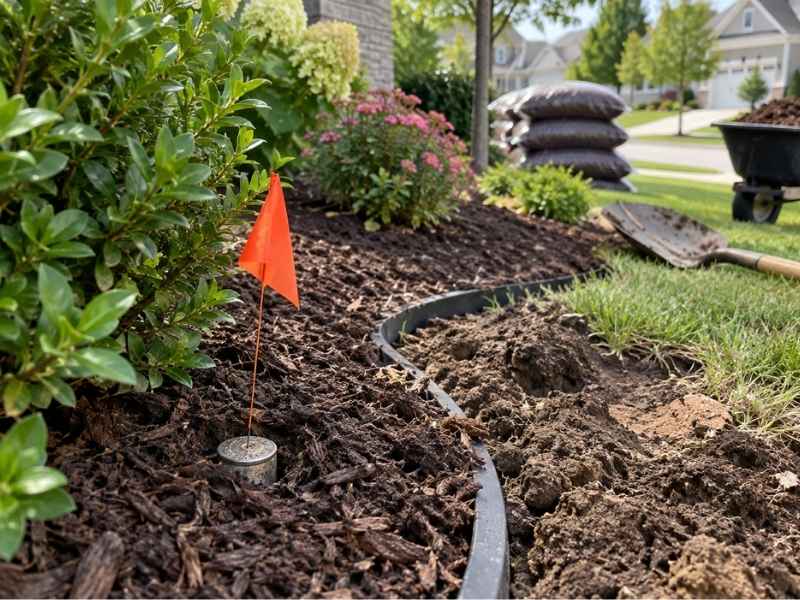
A fresh flower bed or a new row of shrubs can hide more than dirt. Property line markers often sit right where the digging happens. When a crew reshapes your yard, those small metal or stone markers can get moved, buried, or pulled out without anyone noticing. By the time you need one again, it’s gone.
This matters because property line markers set the legal edge of your land. Lose them, and you can run into fence fights, permit delays, or trouble at closing. The good news is that a missing marker doesn’t erase your boundary. This article explains how landscaping disturbs markers, how to spot them, and what to do when one goes missing.
How Landscaping Work Can Disturb Property Line Markers
Landscaping disturbs property line markers because the work happens right at the ground surface, which is exactly where markers live. Most markers sit flush with the soil or just below it. Any digging, grading, or heavy equipment near the edge of a lot can shift them, cover them, or knock them loose. A worker rarely knows a marker is there.
Here is the kind of work that puts markers at risk:
- Trenching for irrigation lines, drains, or lighting near a boundary
- Regrading or leveling that adds or removes soil across the property edge
- New sod, mulch, or gravel that buries a low marker
- Building a retaining wall, patio, or fence footing close to a corner
- Removing trees or stumps, which can rip out a marker in the roots
- Bringing in fill dirt that raises the ground and hides the marker
None of these jobs are careless on their own. The problem is that markers are small and easy to miss. A crew focused on plants and grade won’t stop to protect a rusty pin they never spotted.
Why Some Property Markers Are Difficult to Recognize
Property markers are hard to recognize because they come in many forms and most of them look like scrap. A surveyor may set an iron rod, an iron pipe, a capped rebar pin, or a concrete monument. On older lots you might find a chiseled mark, a drilled hole, or a nail in pavement. Many are rusted, bent, or barely showing above the dirt.
Because they blend in, people often toss them out or mow right over them. A capped pin can look like a bit of pipe. A concrete monument can pass for a chunk of old footing. If you’re not sure whether something is a marker, leave it in place and take a photo before any work starts.
Can a Missing Marker Still Define the Property Boundary?
Yes. A missing marker does not change where your boundary sits. The legal boundary comes from the recorded deed and the survey record, not from the metal pin in the ground. The marker only shows that line on the ground so people can see it.
Think of the marker as a pointer, not the line itself. If it disappears, the line still exists on paper and in the county records. A licensed surveyor can use those records, plus any markers that are still in place, to find the spot again. The corner can be re-set even after every visible marker is gone.
When Should a Surveyor Reestablish a Missing Corner?
You should have a surveyor reestablish a missing corner whenever you need certainty about where your line is. A guess is fine for casual yard work. It is not fine when money, permits, or a neighbor’s opinion are on the line.
Common times to call a surveyor include:
- Before you build a fence, wall, shed, or addition near the edge
- Before you buy or sell the property
- When a permit or site plan requires a marked boundary
- When you and a neighbor disagree about the line
- Before major landscaping close to a corner
To reset the corner, the surveyor pulls the recorded plat and deed, finds nearby markers that are still good, and takes measurements to place a new marker in the correct spot. Rules and timing can vary by property type, county, municipality, lender, and project scope. If a closing, permit, or build date depends on the survey, confirm what you need early so the work isn’t rushed.
How to Protect Survey Markers During Future Landscaping
The best way to protect property line markers is to find them and flag them before any work begins. A few simple steps keep them safe and save you the cost of a re-survey later.
- Walk the property and locate each corner marker before crews arrive
- Mark each one with a bright stake or flag so it stays visible
- Tell your contractor exactly where the markers are and to work around them
- Take clear photos and measure from a fixed point, like a house corner, so you can find the spot later
- Keep heavy equipment away from corners whenever you can
- Store your survey copy somewhere safe with the property records
If you’re planning a big landscaping project, a quick survey first can be worth it. Knowing your true line lets you place beds, walls, and trees with room to spare. That protects the markers and helps you avoid a boundary problem down the road.