
How a Boundary Survey Helps When a Garage Crosses a Line
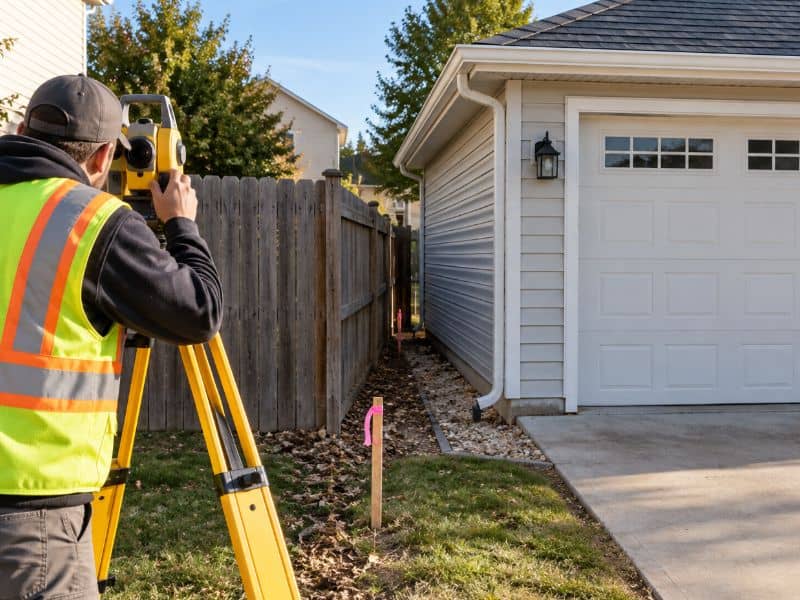
Garages end up in the wrong spot more often than most owners expect. A detached garage built decades ago, an addition that crept toward the fence, or a neighbor’s carport that seems too close can all raise the same worry. Before you talk to a neighbor, a lawyer, or a buyer, you need facts. A boundary survey gives you those facts, and knowing what drives boundary survey cost helps you plan for it without surprises.
Confirming Whether the Garage Actually Crosses the Boundary
The first job of a boundary survey is to answer a simple question. Does the garage sit over the property line, or does it only look that way? Many “encroachments” turn out to be fine once the true line is found.
Fences, driveways, and tree lines are poor guides to where a lot ends. Fences are often set a few feet off the line for convenience. Old stakes may have been moved during past work. A licensed surveyor finds the real corner monuments, checks them against the records, and marks the line on the ground.
This protects you from acting on a guess. If the garage is clear of the line, you can move on with confidence. If it isn’t, you’ll know exactly how much of it crosses and where.
Measuring the Garage Against the Surveyed Property Line
Once the line is set, the surveyor measures the garage in relation to it. Measurements usually go to the building’s corners, walls, and sometimes the roof overhang or gutters. An overhang can cross a line even when the walls don’t.
The results show how far each corner sits from the boundary. A garage might clear the line at one corner and cross it by a foot at another. That detail matters, because a small corner overlap and a full wall over the line can lead to very different outcomes.
Ask your surveyor which parts of the garage they’ll measure. If eaves, slabs, or attached sheds matter to your situation, say so before the field work. Clear instructions up front save a second trip.
Reviewing Plats and Records for Relevant Boundary Evidence
A surveyor doesn’t rely on field measurements alone. They review the deed, the recorded plat, prior surveys, and nearby property records to see how the line was created. This research helps explain why the garage ended up where it is.
Records may show an old lot line that shifted after a replat. They may reveal an easement, which is a right for someone else to use part of your land for things like utilities or access. Sometimes records conflict, and the surveyor has to weigh which evidence controls based on accepted survey practice.
How Records Research Affects Boundary Survey Cost
Records work is one of the biggest factors in boundary survey cost. A lot in a newer subdivision with a clean plat and intact corner pins takes less time. Older properties with missing monuments, vague deeds, or conflicting surveys take more research and field work. Lot size, tree cover, terrain, and how quickly you need results can also change the price, so ask for a quote based on your specific property.
Documenting the Garage Encroachment on the Survey
If the garage crosses the line, the survey will show it. The drawing, often called a plat of survey, shows the property lines, the garage outline, and the measured distances between them. Encroachments are usually labeled with how far the structure extends past the line.
This document becomes your record of the problem. Title companies, lenders, real estate agents, and attorneys may all ask to see it. A clear, signed survey carries far more weight than a photo or a tape measurement from a homeowner.
Keep a copy of the final survey and any field notes the surveyor provides. If corner pins were set or reset, note where they are and ask the neighbor not to disturb them. Those markers can matter later if the issue turns into a negotiation.
Using Survey Results Before Deciding the Next Step
The survey tells you what is there. It doesn’t decide what you should do about it. That choice depends on your goals, your neighbor, and the legal options available.
Common next steps include talking with the neighbor, drafting a boundary agreement, asking about an easement, adjusting a lot line, or in some cases moving or trimming part of the structure. Some of these steps need an attorney or local approval. Requirements can vary by city, county, title company, and lender, so get proper legal advice before signing anything.
If you’re buying or selling, order the survey early. An encroachment found a week before closing can delay the deal or change its terms. Finding it early gives everyone time to work out a fair solution.
Frequently Asked Questions
What does a boundary survey cost when there’s a garage encroachment?
Boundary survey cost depends on the property, not just the garage. Lot size, records research, missing corners, and site access all affect price. Properties with older or conflicting records usually cost more to survey. The best way to know is to request a quote with your address and a short description of the concern.
Can a boundary survey prove a neighbor’s garage is on my land?
A boundary survey shows where the property line sits and where the garage sits in relation to it. That gives you reliable evidence of whether the garage crosses the line. The survey does not settle ownership rights or legal claims by itself. An attorney can explain what the findings mean for your situation.
Will an old survey work instead of a new one?
An old survey can be a helpful starting point for your surveyor. Structures, fences, and corner pins may have changed since it was done. Lenders and title companies often want a current survey for a sale or refinance. Ask your surveyor whether an update is possible or a new survey is needed.